
Pedestrian Accidents

Washington Pedestrian Accident Lawyers for Truck and Bus Crashes

There is no vehicle frame, airbag, or seat belt to absorb the force of the collision when you’re a pedestrian. When the striking vehicle is especially large and heavy, the consequences can be catastrophic even at lower speeds.

Seattle Truck Law, PLLC focuses on serious accidents involving large trucks, buses, and commercial vehicles, including those involving pedestrians. Large vehicles have substantial blind areas, require more space to turn and stop, and are frequently operated by businesses or government agencies that possess important evidence about the driver and vehicle.

If you or someone you love was seriously injured while walking in Washington—or if your family lost someone after a pedestrian truck or bus crash—contact Seattle Truck Law. We can investigate what happened, determine who may be responsible, and help you understand your legal options.

Get Your Free Case Evaluation

This field is for validation purposes and should be left unchanged.
Name*

Quick Answer

Pedestrian Injuries and Fatalities Are a Serious Problem in Washington

Pedestrian crashes have become an increasingly serious traffic safety problem across Washington.

According to the Washington State Department of Transportation, 155 pedestrians were killed in Washington traffic crashes during 2024 and 469 were seriously injured. Pedestrians accounted for 21.2% of Washington traffic fatalities and 14.2% of serious traffic injuries that year.

Nationwide, the Federal Motor Carrier Safety Administration (FMCSA) reported 533 pedestrian fatalities in crashes involving large trucks in 2022, representing about 7% of all pedestrian traffic deaths that year. Another 48 pedestrians were killed in bus crashes.

Pedestrian collisions are a significant category of fatal large truck crashes. FMCSA recorded 471 large trucks involved in fatal crashes in 2022 where a collision with a pedestrian was the truck’s most harmful event.

Why Do Commercial Trucks and Buses Pose Special Risks to Pedestrians?

Aside from the sheer mass of large trucks and buses, these vehicles also don’t move or handle like passenger cars. The FMCSA specifically warns pedestrians about three characteristics of large commercial vehicles:

  • Large blind spots
  • Wide turns
  • Long stopping distances

Blind Spots Can Hide Pedestrians From View Commercial vehicles can have substantial areas around the front, sides, and rear where visibility is limited. A pedestrian may be particularly vulnerable when walking near a truck that is pulling away from a loading area, backing into a jobsite, entering a driveway, or making a turn at an intersection.

The fact that a pedestrian was in a driver's blind area does not automatically mean a crash was unavoidable. An investigation may need to determine whether mirrors and cameras were functioning, the driver checked appropriate areas, a spotter should have been used, and company procedures adequately addressed pedestrian safety.

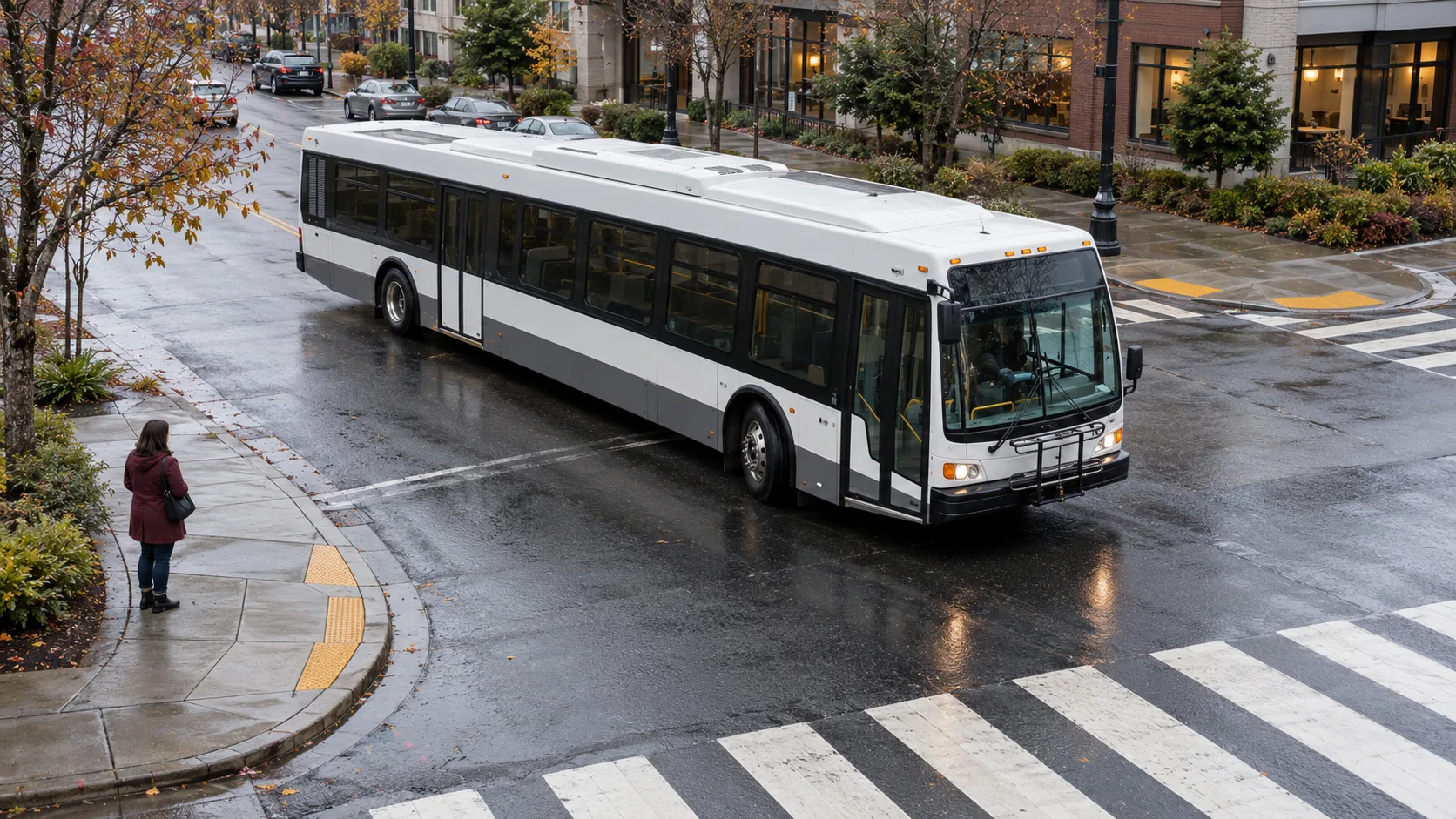
Wide Turns Create Intersection and Crosswalk Risks Trucks and buses need more room to turn than passenger cars. A driver may initially move away from the curb before completing a right turn, while portions of the vehicle may pass close to sidewalks and crosswalks.

Federal Transit Administration data states that, from 2017 through 2023, 41% of reported transit bus-to-person collisions occurred at roadway intersections. About half of those intersection collisions involved pedestrians in crosswalks. Among the crosswalk incidents producing an injury or fatality, more than half occurred while the bus was making a left turn.

An intersection collision should always be examined carefully. Investigators may need to determine where the pedestrian was located, what the traffic signal displayed, what the driver could see, how quickly the bus or truck was turning, and whether the driver properly checked the crosswalk before entering it.

Backing Trucks Can Be Extremely Dangerous Commercial trucks regularly back into or out of loading docks, construction projects, alleys, delivery areas, parking lots, and other locations where people may be walking.

FMCSA specifically warns pedestrians not to walk behind a backing truck because drivers may not be able to see directly behind the vehicle.

For the trucking company, however, blind spots are a known hazard that should be managed.

After a backing accident, Seattle Truck Law may investigate whether the truck had working cameras or alarms, whether a spotter was required or available, what company backing procedures existed, whether the driver performed an appropriate visual check, and whether the site itself created an unsafe situation.

Commercial Vehicles Seattle Truck Law Investigates

Seattle Truck Law has extensive experience litigating cases involving commercial vehicles, including:

The investigation should reflect the particular vehicle involved. A delivery truck backing from an alley may involve company route and backing procedures. A cement truck entering a construction project may raise questions about jobsite traffic controls and spotters.

Seattle Truck Law approaches each case by examining what made that particular commercial vehicle operation dangerous.

Washington Drivers Have Duties Toward Pedestrians

Washington law establishes protections for pedestrians in and around roadways.

Under RCW 46.61.235, drivers generally must stop and remain stopped to allow a pedestrian to cross within a marked or unmarked crosswalk when the pedestrian is within the portion of the roadway specified by the statute. A crosswalk doesn’t necessarily need painted lines to exist, either. Intersections can contain unmarked crosswalks.

Washington also imposes a broader duty on drivers. RCW 46.61.245 requires every driver to exercise due care to avoid colliding with pedestrians and to take proper precautions upon observing children or obviously confused or incapacitated people in a roadway. Drivers of large vehicles often need to take greater care and efforts, which tend to be described in training and safety materials.

Pedestrians do also have responsibilities under Washington traffic law. The circumstances of the crossing matter, but simply claiming that a pedestrian was difficult to see or outside a painted crosswalk doesn’t automatically resolve who was legally responsible.

Who May Be Responsible for a Commercial Vehicle Pedestrian Crash?

The driver may be responsible when speeding, distraction, failure to yield, poor surveillance, an unsafe turn, or another driving error causes a crash. But a commercial driver is often operating as part of a larger business.

Depending on the facts, the list of potentially responsible parties might be longer than you’d expect:

  • The truck or bus driver
  • The driver’s employer
  • A motor carrier or trucking company
  • A delivery company
  • A commercial vehicle owner
  • A transit agency
  • A school district or transportation contractor
  • A maintenance provider
  • A construction contractor
  • A company controlling a worksite or loading area
  • A manufacturer of defective mirrors, cameras, brakes, or other equipment
  • Another negligent motorist

Seattle Truck Law looks beyond the immediate collision to determine whether company-level failures also contributed to the pedestrian’s injuries.

Transit bus making a wide turn through a wet intersection as a pedestrian waits at the corner

Public Bus Pedestrian Accidents Can Involve Special Procedures

Pedestrians are sometimes injured by publicly operated transit buses rather than private commercial vehicles. These cases can involve additional legal requirements.

Under Washington’s RCW 4.96.020, damages claims against covered local governmental entities generally must be formally presented to the entity’s designated agent before a lawsuit is filed. The statute generally requires 60 calendar days to pass following presentment before an action may begin.

That makes it important to quickly identify who operated the bus. A crash involving a public transit agency may follow a different procedural path from a crash involving a privately operated charter bus.

What Evidence Can Be Critical to Pedestrian Accident Cases?

Pedestrian commercial vehicle crashes can produce valuable evidence, but not all of it may remain available forever. Depending on the case, Seattle Truck Law may investigate:

  • Onboard truck or bus camera footage
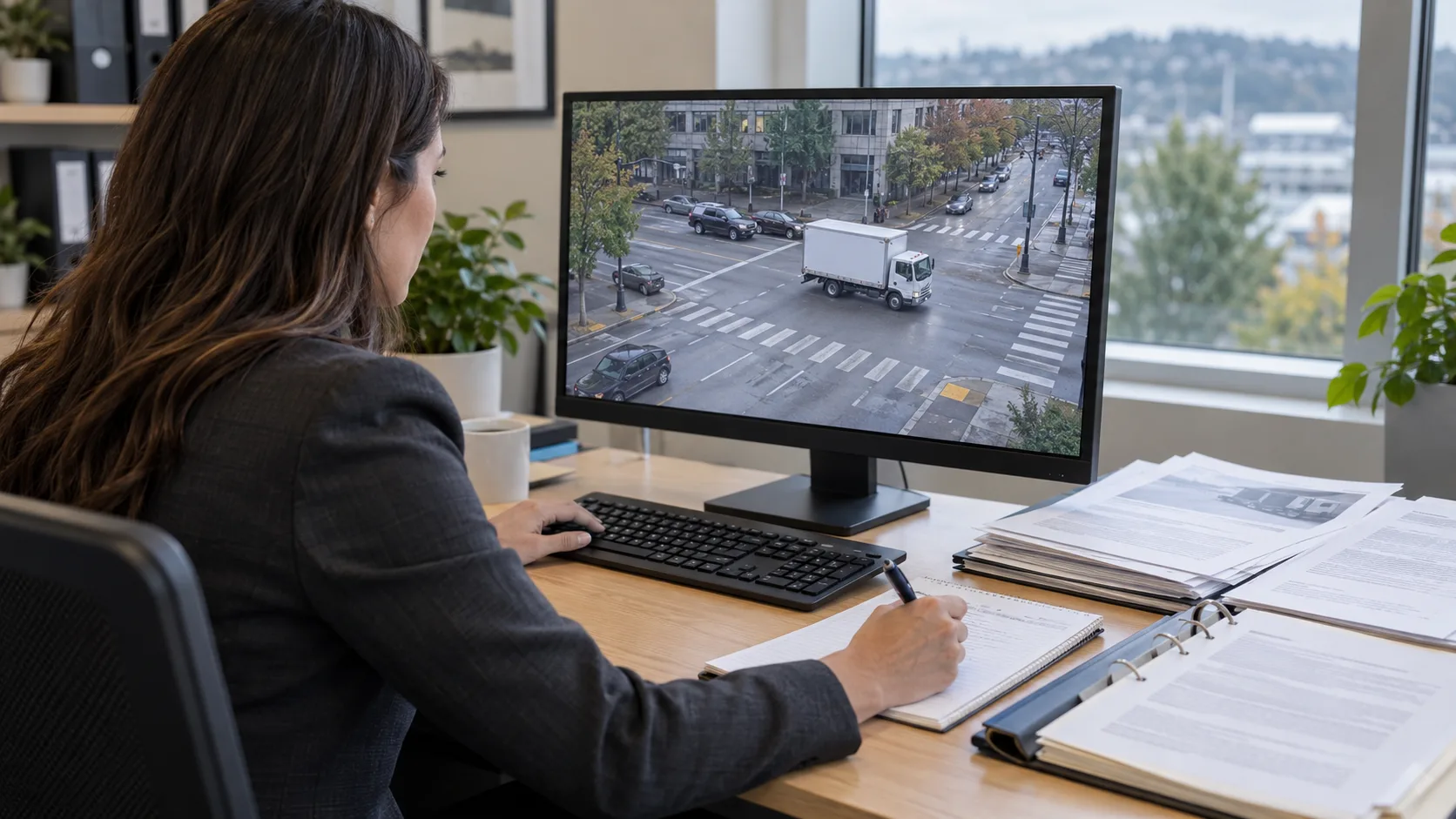
  • Exterior surveillance video
  • Traffic camera footage
  • GPS and telematics data
  • Electronic vehicle information
  • Driver qualification and training records
  • Dispatch communications
  • Cellphone records
  • Vehicle inspection and maintenance records
  • Mirror and camera systems
  • Company safety and backing policies
  • Bus route and schedule information
  • Construction site traffic control plans
  • Witness statements
  • Police photographs and measurements

Physical evidence can also help accident reconstruction experts determine where the pedestrian was located, how the vehicle moved, and whether the driver should have had an opportunity to see and avoid the collision.

Prompt investigation matters because video can be overwritten, vehicles can be repaired, and witnesses become harder to locate over time.

Pedestrians Can Suffer Catastrophic Injuries

A pedestrian struck by a commercial vehicle can suffer multiple injuries in the initial impact and additional injuries after being thrown to the ground or run over.

Common serious injuries may include traumatic brain injuries, spinal cord damage, paralysis, amputations, crush injuries, fractures, internal organ damage, nerve injuries, severe lacerations, and permanent mobility limitations.

Some survivors face months or years of rehabilitation. Others may need assistive equipment, home modifications, personal care, additional surgeries, or lifelong medical treatment.

A serious injury claim should therefore consider more than bills that have already arrived. The long-term effect on the injured person’s work, independence, health, family life, and future care often are equally important.

What if the Trucking Company Blames the Pedestrian?

Pedestrian cases frequently involve disputes over where someone was walking, whether the driver could see them, and whether either party had enough time to avoid the collision.

Washington follows a comparative-fault system. Under RCW 4.22.005, fault assigned to an injured person generally reduces compensatory damages proportionately rather than automatically preventing recovery. That means an insurance company’s allegation that a pedestrian was partly responsible does not automatically end a case.

Frequently Asked Questions About Pedestrian Truck and Bus Accidents

Yes. Seattle Truck Law represents pedestrians injured by commercial trucks and buses across the state of Washington. Consultations are free.

Get appropriate emergency and medical treatment first. Pedestrian crashes can cause serious injuries even when symptoms are not immediately obvious.

If you or another trusted person can do so, preserve photographs, witness information, police paperwork, medical records, and communications from insurance companies. Contacting a truck accident lawyer promptly can also help preserve commercial vehicle video and electronic records.

Yes, you may still have a case. Washington law imposes duties on both pedestrians and drivers, and the precise location and circumstances matter.

Even if a pedestrian is found partly responsible, Washington’s comparative fault statute reduces damages by your share of fault but doesn’t bar recovery entirely.

Responsibility may include the driver, but investigators should also consider the trucking company, employer, vehicle owner, site operator, or other party.

A backing case may turn on visibility, mirrors, cameras, warning alarms, spotters, company procedures, driver training, and the layout of the location where the crash occurred.

Most Washington pedestrian injury claims must be filed within three years.

However, claims against a city, county, or transit agency require a pre-suit claim and a 60-day wait.

In any circumstance, we never recommend waiting until close to any deadline to contact an attorney. The sooner you can discuss your legal options and collect evidence, the stronger your case can likely be.

Depending on the case, damages may include medical expenses, future treatment and rehabilitation, lost income, reduced earning ability, disability-related costs, pain and suffering, and other losses caused by the collision.

For catastrophic injuries, understanding future care and financial needs before resolving a claim can be especially important.

Attorney reviewing intersection traffic footage of a box truck while taking notes on a pedestrian case

Talk to Seattle Truck Law After a Pedestrian Truck or Bus Accident

Seattle Truck Law focuses on serious accidents involving large trucks, buses, and other commercial vehicles. We represent injured people and families throughout Washington and work to preserve evidence, identify responsible parties, and build cases that help our clients get the support and justice they deserve.

If you or someone you love was seriously injured as a pedestrian in an accident involving a truck, bus, or other commercial vehicle—or your family lost a loved one—call 866-580-HURT (4878) or contact Seattle Truck Law to request a free initial consultation.

Vehicles Where This Happens

Related Accident Causes

client testimonials

Contact the Seattle Truck Law Team Today

If you’ve been injured in a trucking accident, contact Seattle Truck Law at (866) 580-4878 or fill out our online form for a free consultation. You pay no fees or expenses unless we recover compensation on your behalf. Don’t wait—the sooner you contact us, the sooner our attorneys can preserve evidence, investigate your claim, and start building your case.

This field is for validation purposes and should be left unchanged.
Name*