Logging Truck Accidents

Washington Logging Truck Accident Lawyer

Seattle Truck Law represents people injured in logging truck accidents throughout Washington State, including Seattle, Tacoma, Spokane and Olympia, and offers free case reviews.

Logging trucks are a necessary part of Washington’s forest products industry, but few commercial vehicles carry the same combination of size, weight, unusual cargo, and operating conditions. When something goes wrong, the consequences can be catastrophic.

Seattle Truck Law, PLLC focuses on serious crashes involving large trucks, buses, and other commercial vehicles. If you or someone you love suffered a serious injury in a logging truck crash—or if your family lost someone in a fatal collision—Seattle Truck Law can investigate what happened and help you understand your legal options.

Get Your Free Case Evaluation

This field is for validation purposes and should be left unchanged.
Name*

Quick Answer

Logging Trucks Require a Careful, Respectful Approach

Logging trucks are especially relevant in Washington because forestry remains an important part of the state’s economy, particularly in rural communities.

The Washington State Department of Transportation’s 2022 Freight System Plan reported that trucks carried more than 87% of Washington forestry products by weight and more than 77% by value.

Unfortunately, collisions involving logging trucks can have devastating consequences. According to the Federal Motor Carrier Safety Administration’s Large Truck and Bus Crash Facts 2022, 84 large trucks with a “Log” cargo-body classification were involved in fatal crashes nationwide in 2022. FMCSA’s data also recorded 643 log-body large trucks involved in injury crashes and 891 involved in towaway crashes that year.

Serious and fatal crashes involving logging trucks continue to occur both in Washington and across the country. The unusual characteristics of these vehicles deserve careful attention when a collision is investigated.

What Makes Logging Truck Accidents So Dangerous?

A log truck is not simply a tractor-trailer carrying ordinary freight. The cargo itself changes the risks involved. 

Logs Are Extremely Heavy 

Logs can add enormous weight to a truck and trailer combination. The heavier a commercial vehicle becomes, the more important proper speed, braking, loading, and maintenance become. 

A driver approaching a curve, intersection, downhill grade, traffic backup, or emergency may need substantially more distance to bring a heavily loaded vehicle under control. 

Washington has specific commercial-vehicle weight rules, and WSDOT even provides a specialized log-tolerance permit for certain combinations hauling unprocessed short logs. Determining what a truck actually weighed can therefore be an important part of a logging accident investigation. 

Logs Must Be Properly Secured 

Few cargo-securement failures are potentially more frightening than a log coming off a moving truck. 

Federal regulations contain rules specifically addressing the transportation of logs. 49 C.F.R. § 393.116 applies to most log loads and establishes specialized securement requirements beyond the general rules governing ordinary freight. 

Washington also has its own detailed logging-truck requirements. Under WAC 204-44-020, the required number and placement of wrapper chains or cables depends on matters such as the number of logs, their length, how they are loaded, and whether the truck uses stakes or chock blocks. 

Those regulations exist for a reason. If they are violated, they can greatly endanger the safety of anyone remotely around the truck. 

Logs May Extend Beyond the Truck or Trailer 

Logging trucks may carry loads that extend well beyond the rear of the vehicle. 

Washington requires warning flags when a load extends more than four feet beyond the rear of a vehicle. During times when vehicle lighting is required, a load extending four feet or more beyond the rear must also have specified red lamps and reflectors marking the rear and sides of the projection. 

A failure to properly mark an overhanging load can create an obvious danger for motorists approaching from behind, particularly in darkness, rain, fog, or other low-visibility conditions.

Logging Trucks Often Travel Challenging Roads

WSDOT specifically recognizes that logging trucks often operate over difficult terrain and a combination of forest, private, and public roads. 

Drivers need to adjust their speed and operation to those conditions. A speed that might be safe for an ordinary vehicle—or even an empty commercial truck—may not be safe for a heavily loaded logging truck descending a grade or entering a sharp curve.

Red logging truck hauling timber on a curving mountain highway

What Causes Logging Truck Crashes?

Logging truck accidents can result from one or more contributing factors, not all of which may be directly related to the driver. Some factors to consider in a logging truck accident investigation include: 

  • Driver fatigue 
  • Speeding 
  • Driving too fast for conditions 
  • Improper loading or securing of logs 
  • Overweight or overlength loading 
  • Brake, tire, and mechanical problems 
  • Distracted or impaired driving 

Who May Be Responsible for a Logging Truck Accident? 

One of the most important questions after a logging truck crash is whether responsibility extends beyond the driver. 

Logging operations can involve several different businesses. One company may own timberland. Another may harvest the trees. A third may load the logs. An independent motor carrier or owner-operator may transport them. Another company may maintain the truck. 

Depending on the facts, there’s a long list of potentially responsible parties: 

  • The logging truck driver 
  • The driver’s employer 
  • The motor carrier 
  • The truck or trailer owner 
  • A logging company 
  • A timber or forest-products company 
  • A company responsible for loading the truck 
  • A maintenance or repair provider 
  • A contractor or subcontractor 
  • A company responsible for unsafe equipment 
  • Another negligent motorist or entity that contributed to the crash 

The existence of several companies does not automatically mean that all of them are liable. Responsibility depends on what each party did, what duties it had, how much control it exercised, and how its conduct contributed to the collision. 

Any good investigation should trace the entire operation rather than stop with the name printed on the truck door. Identifying parties that face reasonable liability can increase the pool of available recovery money that a victim and their family can potentially receive to meet their needs. 

What Evidence Might Matter in a Logging Truck Case? 

Trucking cases often involve evidence that does not exist in ordinary car accident claims. Depending on the crash, Seattle Truck Law may investigate or seek preservation of evidence such as: 

  • The tractor, truck, trailer, and logging equipment 
  • Wrapper chains, cables, stakes, bunks, and other securement devices 
  • Weight and scale records 
  • Load tickets and mill records 
  • Bills of lading or shipping documents 
  • Driver qualification records 
  • Training records 
  • Electronic logging information, when applicable 
  • GPS and telematics data 
  • Electronic vehicle or engine data 
  • Dispatch records 
  • Cellphone records 
  • Maintenance and inspection documents 
  • Prior repair records 
  • Photographs and video 
  • Dashcam or onboard camera footage 
  • Nearby surveillance video 
  • Permits for overweight or overlength operation 
  • Company safety policies 
  • Contracts between logging, trucking, timber, loading, and other companies 

Physical evidence can change quickly. Trucks can be repaired and returned to service, electronic information may be overwritten, and chains or other equipment can disappear. Businesses may also legally retain particular records for limited periods. Our firm knows how to request and secure evidence quickly. 

Injuries Caused by Logging Truck Crashes 

The combination of truck weight and heavy, rigid cargo makes logging truck collisions capable of extraordinary harm. 

Serious injuries may include traumatic brain injuries, spinal cord damage, paralysis, amputations, crush injuries, multiple fractures, internal organ injuries, severe lacerations, chronic pain, nerve damage, psychological trauma, and other permanent impairments. 

Compensation for a catastrophic crash survivor should not be evaluated based only on the medical bills that have already arrived. A person may need future surgery, rehabilitation, medication, home health care, mobility equipment, home modifications, vocational assistance, or lifelong support.  

Additionally, a permanent disability may prevent someone from returning to the same work or enjoying the same independence and activities they had before the crash. A carefully prepared injury claim needs to account for long-term consequences including loss of potential wages and enjoyment of life.

When a Logging Truck Crash Is Fatal 

No amount of money replaces a family member killed in a logging truck crash. A wrongful death case can, however, provide a legal means of holding responsible parties accountable and addressing losses caused by the death. 

Washington law allows a personal representative to bring a wrongful death action when a person’s death is caused by another’s wrongful act, neglect, or default. The law identifies beneficiaries who may recover under different circumstances and recognizes both economic and noneconomic damages. 

Fatal logging truck cases can also involve survival claims under Washington law, depending on the circumstances. 

Families dealing with a sudden death should not have to personally investigate trucking companies, logging contractors, vehicle records, or cargo practices while they are grieving. An experienced truck accident lawyer can take responsibility for preserving evidence and determining how the crash occurred. 

Why Hire a Logging Truck Accident Lawyer? 

Logging truck litigation can require knowledge of issues that rarely arise in an ordinary automobile accident. 

An attorney may need to understand federal cargo-securement regulations, Washington’s specific logging-truck securement rules, commercial vehicle weights and permits, projecting-load requirements, hours-of-service regulations, commercial driver qualifications, vehicle inspection and maintenance requirements, and trucking-company recordkeeping. 

The case may also require experts in accident reconstruction, commercial trucking operations, cargo securement, engineering, vehicle maintenance, medicine, life-care planning, vocational rehabilitation, or economics. 

Seattle Truck Law’s practice focuses on large truck, bus, and commercial vehicle accidents. We tap into logging truck-specific experience and a national network of experts to investigate crashes, uncover evidence, and pursue claims against negligent drivers and companies. Seattle Truck Law represents clients throughout Washington and also works with local counsel on appropriate cases elsewhere in the country.

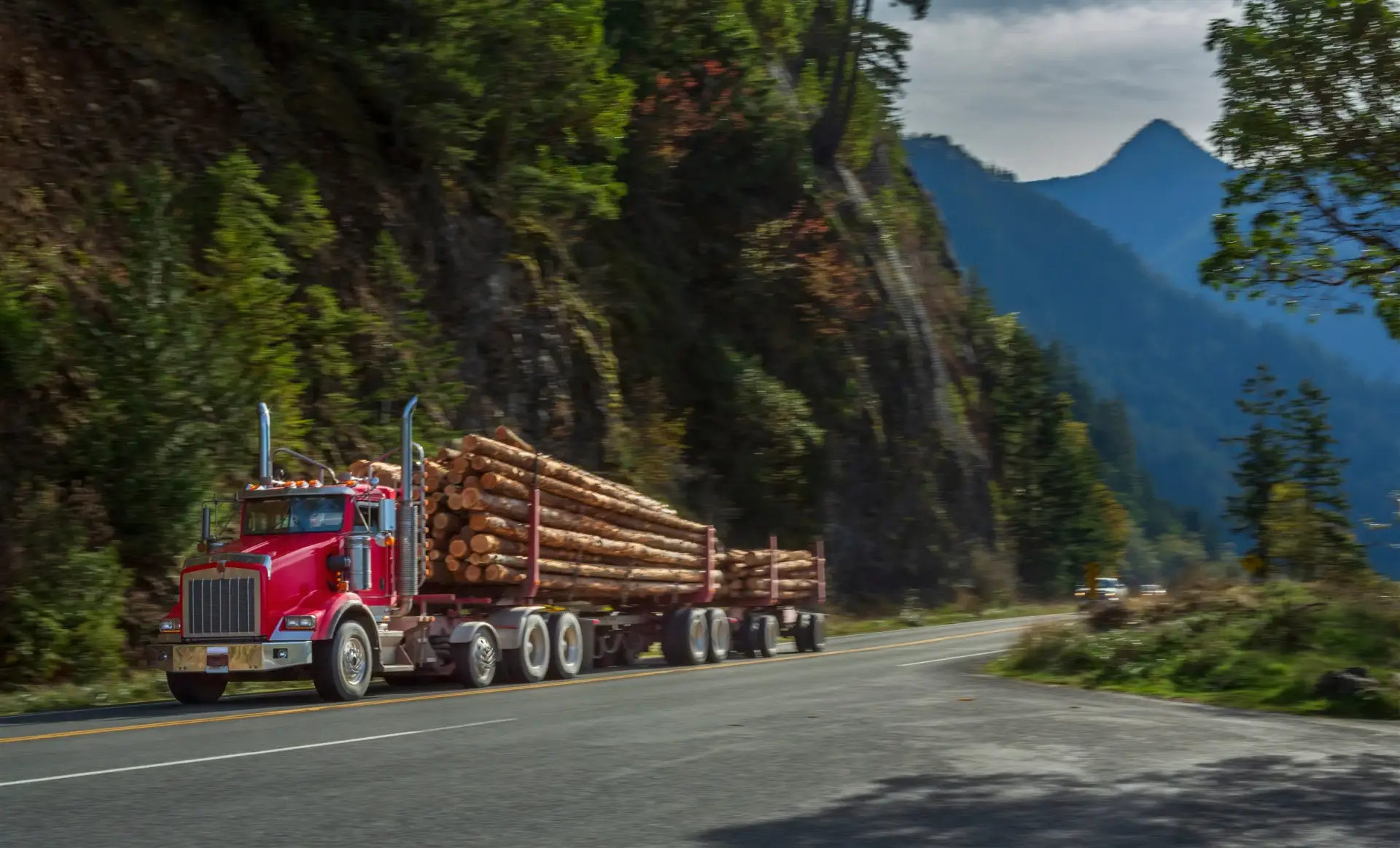
Logging truck driving on a forest road in Washington

Talk to Seattle Truck Law After a Serious Logging Truck Crash 

A catastrophic logging truck crash can leave an injured person or family facing medical treatment, permanent disabilities, financial uncertainty, insurance disputes, or the loss of someone they love. 

Meanwhile, the trucking company, logging company, and their insurers may begin protecting their interests immediately. 

We know that building a logging truck case may require investigating much more than the driver. If you or someone you love has been seriously injured in a logging truck crash—or if your family has lost a loved one—call 866-580-HURT (4878) or contact Seattle Truck Law to request a free initial consultation. 

Vehicles Where This Happens

Related Accident Causes

Frequently Asked Questions About Logging Truck Accidents

Get appropriate medical care first. Serious injuries are not always fully apparent at the scene and your health should be the priority. 

If possible, preserve photographs, videos, witness information, police documents, insurance correspondence, and anything else related to the collision. If logs, branches, chains, or other debris were on the roadway, photographs of those conditions may be particularly important. 

You should also consider contacting a logging truck lawyer promptly so that evidence controlled by the trucking or logging companies can be identified and preserved. 

A logging truck does not need to strike your vehicle directly for negligence to cause an injury. A falling log can strike another vehicle, while smaller pieces of wood or debris can cause a motorist or motorcyclist to crash while attempting to avoid them. 

Federal and Washington regulations contain specific requirements for securing logs. The facts of the case may require an examination of the load, securement equipment, loading process, driver inspections, and the parties responsible for putting the truck on the road. 

Potentially, but not automatically. 

Logging and timber operations often involve contractors or owner-operators. Simply calling a driver an “independent contractor” does not answer every legal question concerning responsibility. 

An investigation may need to examine contracts, dispatch practices, payment arrangements, control over the work, loading responsibilities, equipment ownership, safety requirements, and the relationships between the driver and the companies involved.

Rear overhang is not necessarily illegal, but it is regulated. 

Washington law generally requires warning flags when a load extends more than four feet beyond the rear of a vehicle. Additional lighting and reflector requirements apply during times when vehicle lighting is required. Oversize or overlength operations may also require permits depending on the dimensions and circumstances. 

A crash involving protruding logs should therefore include an investigation into the dimensions of the load and whether required markings, lights, reflectors, and permits were in place. 

Overloading may become important evidence of negligence or a regulatory violation, depending on the facts. 

Investigators may seek scale records, weight tickets, loading records, permits, mill documents, or other evidence showing how much the truck weighed. 

The investigation should also determine who decided how much timber to place on the truck and whether the driver or company knew—or should have known—that the load created a safety problem. 

Washington law does not automatically bar recovery simply because an injured person is assigned some fault. 

Under RCW 4.22.005, contributory fault generally reduces compensatory damages in proportion to the claimant’s share of responsibility. 

Do not assume an insurance company’s accusation accurately reflects what happened. Physical evidence, truck data, witnesses, photographs, video, and accident reconstruction may provide a much more reliable picture.

Washington generally provides a three-year limitations period for personal injury actions. However, the correct deadline depends on the facts and parties involved, and some claims can involve additional notice requirements or different rules. 

More importantly, the statute of limitations does not tell you how long evidence will remain available. Important trucking records and electronic information may disappear much sooner. Early investigation can therefore matter even when the lawsuit filing deadline is years away. 

The available damages depend on the individual case. 

A claim may include past and future medical expenses, rehabilitation, lost wages, diminished future earning capacity, disability-related expenses, pain and suffering, loss of enjoyment of life, and other economic or noneconomic losses caused by the crash. 

For catastrophic injuries, understanding  full future medical and personal-care needs is important before determining whether a settlement adequately compensates the injured person. 

client testimonials

Contact the Seattle Truck Law Team Today

If you’ve been injured in a trucking accident, contact Seattle Truck Law at (866) 580-4878 or fill out our online form for a free consultation. You pay no fees or expenses unless we recover compensation on your behalf. Don’t wait—the sooner you contact us, the sooner our attorneys can preserve evidence, investigate your claim, and start building your case.

This field is for validation purposes and should be left unchanged.
Name*