
Home / Practice Areas /
Hazmat Truck Accidents
Washington Hazmat Truck Accident Lawyers
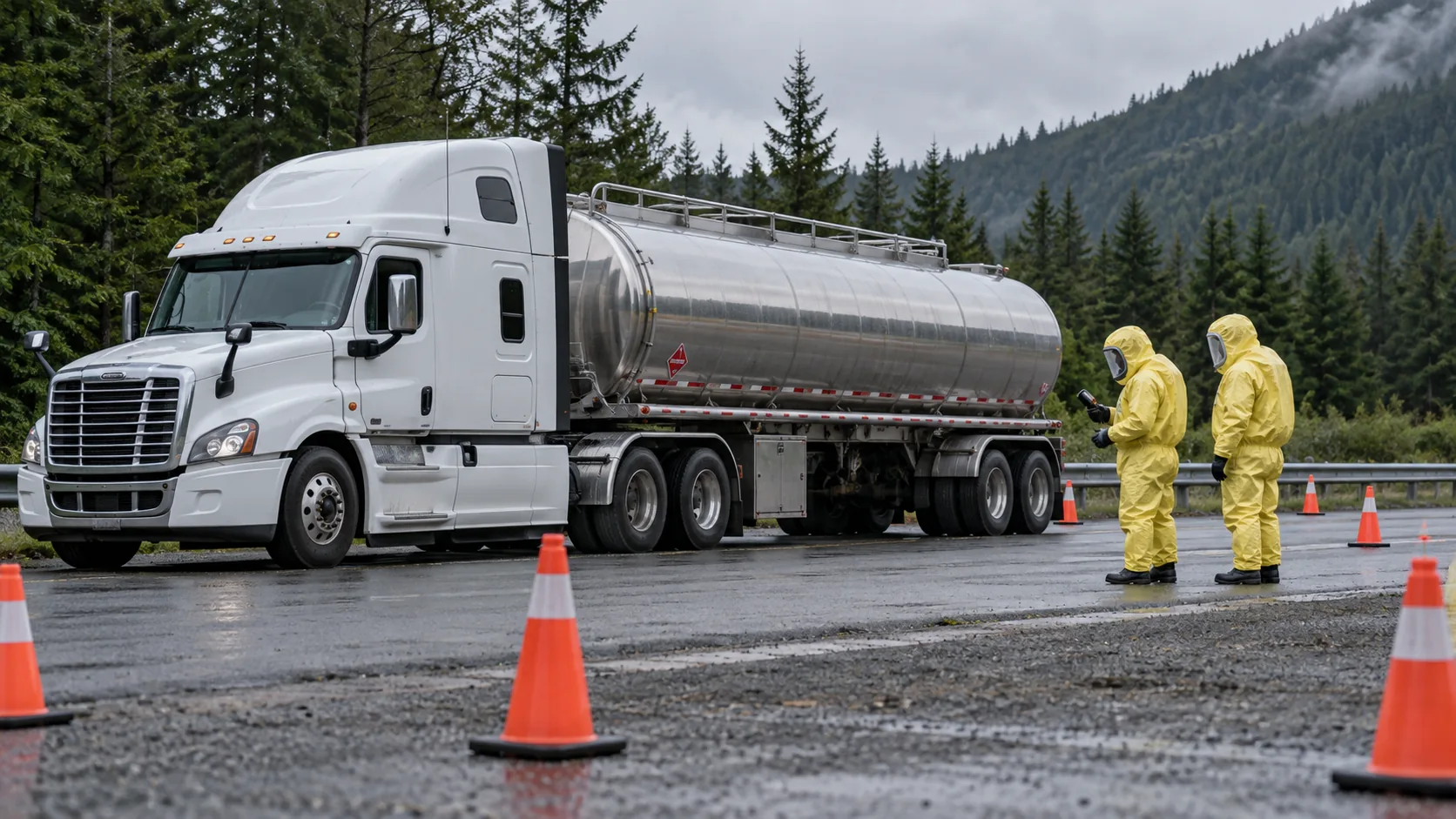
A collision with a commercial truck can be devastating on its own. When that truck is carrying hazardous materials, the dangers can extend well beyond the initial impact.
The commercial truck lawyers at Seattle Truck Law understand that a hazmat truck accident can require a different investigation from an ordinary tractor-trailer collision. That can include very specific state and federal laws as well as a host of additional dangers and long-term needs an injured client may face.
If you or someone you love suffered a serious injury in an accident involving a commercial vehicle carrying hazardous materials—or your family lost a loved one—Seattle Truck Law can investigate what happened and help you understand your legal options.
Get Your Free Case Evaluation
Quick Answer
What Is Considered Hazardous Material?
The federal definition of hazardous materials is broad. According to the Federal Motor Carrier Safety Administration (FMCSA), regulated hazardous materials include substances designated by the U.S. Department of Transportation as posing an unreasonable threat to the public or environment.
Federal rules divide hazardous materials into nine general classes:
- Class 1: Explosives
- Class 2: Gases
- Class 3: Flammable liquids
- Class 4: Flammable solids, spontaneously combustible materials, and materials dangerous when wet
- Class 5: Oxidizers and organic peroxides
- Class 6: Toxic and infectious substances
- Class 7: Radioactive materials
- Class 8: Corrosive materials
- Class 9: Miscellaneous hazardous materials
Different classes of hazards require different packaging, handling, labeling, segregation, and transportation precautions.
Hazmat is not transported only in tanker trucks. Hazardous materials may also be carried in cylinders, drums, intermediate bulk containers, packages, trailers, vans, flatbeds, and other commercial vehicles.
Hazardous Material Transportation Creates Additional Risks
Federal safety rules recognize that transporting hazardous material can expose the public to risks that do not exist with ordinary freight.
At the Pipeline and Hazardous Materials Safety Administration (PHMSA) 2024 Hazmat Roundtable, the Chemical Transportation Emergency Center reported tracking 32,184 hazardous-material leaks or spills and 2,443 human exposures during 2023, along with 334 accidents involving highway transportation vehicles in which no release occurred. Not every reported leak or spill here involved highway transportation, but the data illustrates the scale of hazmat transportation incidents nationwide.
Injuries Can Come from Both the Crash and the Cargo
A person involved in a hazmat truck accident can suffer injuries from the collision itself, including traumatic brain injuries, spinal cord injuries, fractures, amputations, internal injuries, and crush injuries.
The hazardous cargo can create additional harm.
Depending on the substance, victims may suffer burns, chemical burns, eye injuries, respiratory injuries, toxic exposure, or other medical complications. Fires and explosions can cause severe thermal injuries, while a release may expose people who were not initially struck by the truck at all.
Any legal case should consider all injuries related to the event, including appropriate treatment and future medical needs associated with chemical exposure when supported by the medical evidence.
How Can You Identify What a Truck Was Carrying?
Many hazardous material shipments must display diamond-shaped placards on the commercial vehicle.
These placards are generally placed on both sides and both ends of covered trucks or containers. Their colors, symbols, numbers, and hazard class markings are intended to help transportation workers, regulators, and emergency responders quickly identify the general danger presented by the cargo.
A placard or four-digit identification number can become important evidence after a crash. However, never approach a damaged truck simply to read a placard. Follow the instructions of emergency responders and remain a safe distance away.
What Can Cause a Hazmat Truck Accident?
Many hazmat crashes happen much like other serious commercial truck crashes: from speeding, fatigue, distraction, unsafe lane changes, inadequate driver training, mechanical defects, or poor maintenance.
Hazmat cases can also involve failures unique to dangerous cargo.
Improper Classification or Documentation Someone must properly identify the material before it is transported. Incorrect classification can affect required packaging, labels, placards, segregation, shipping papers, and emergency-response information.
An error made before the truck ever leaves the loading facility can make a later collision significantly more dangerous.
Improper Packaging or Loading Federal regulations establish detailed requirements for hazardous material packaging and for loading commercial vehicles.
Containers may need to withstand specific pressures or environmental conditions. Incompatible materials may need to be separated. Cargo must be properly secured so that it does not shift, fall, rupture, or create another hazard during transportation.
A shipper, loader, carrier, or another party may therefore need to be investigated when packaging or loading contributes to a release.
Missing or Incorrect Placards Incorrect or missing hazard information can complicate an emergency response or even lead to further injuries. Investigators may need to determine who was responsible for selecting and displaying the placards and whether the vehicle was properly marked when it entered the roadway.
Route Violations Some hazardous materials are restricted from particular roads, tunnels, or locations.
A carrier that ignores a route restriction may unnecessarily expose motorists and nearby communities to risks that transportation authorities specifically attempted to avoid.
Poor Vehicle Maintenance A hazmat shipment is only as safe as the commercial vehicle carrying it.
Brake failure, tire failure, steering problems, trailer defects, damaged cargo tanks, faulty valves, or other mechanical problems can lead to a collision or make a hazardous material release worse after impact.
Who May Be Responsible for a Hazmat Truck Accident?
Hazmat transportation often involves more companies than drivers and motor carriers alone.
Depending on how the shipment was prepared and transported, potentially responsible parties may include the:
- Truck driver
- Trucking company
- Driver’s employer
- Shipper
- Cargo owner
- Loading facility
- Packaging company
- Maintenance provider
- Cargo tank inspection or repair facility
- Contractor
- Manufacturer of defective equipment
Federal hazardous material regulations recognize responsibilities associated with functions such as classifying a material, selecting packaging, filling containers, preparing shipping papers, providing emergency response information, loading and bracing cargo, segregating incompatible substances, and selecting placards. The company performing one of those jobs may be different from the company whose name appears on the tractor.
A proper investigation should therefore trace the shipment from preparation and loading through the collision rather than focusing exclusively on the person behind the wheel.
Evidence After a Hazardous Materials Truck Crash
Hazmat cases can generate unusual and highly technical evidence.
In addition to electronic logging information, GPS data, maintenance records, onboard cameras, cellphone records, driver files, and ordinary trucking evidence, attorneys may need to obtain shipping papers, hazardous material manifests, safety data, emergency response documents, placarding records, bills of lading, loading documents, packaging records, hazmat employee training information, permits, route plans, and PHMSA or National Response Center reports.
Federal regulations require certain serious hazardous-material transportation incidents to be reported promptly to the National Response Center, and certain incidents must also be reported to PHMSA on Form 5800.1 within 30 days.
Experienced truck accident attorneys know how to request and acquire this evidence quickly before it can be lost, destroyed, or overwritten. Everything from driver qualifications to routing can become a critical part of proving negligence or liability.

Frequently Asked Questions About Hazmat Truck Accidents
Do not approach or touch the spilled material. Move to a safe location if you can do so without putting yourself in additional danger and follow instructions from police, firefighters, or hazardous material response personnel.
Seek appropriate medical attention, particularly if you were exposed to smoke, fumes, liquids, or other material during the crash.
No. Placarding requirements depend on the type, amount, packaging, and classification of the material. Some hazardous material shipments do not require the same external placards as others.
The absence of a visible placard does not necessarily establish that no regulated material was aboard the vehicle.
Tell your truck accident attorney and, if appropriate, medical or emergency personnel. Hazardous material identification numbers and placards can help determine what substance the truck was transporting.
Do not put yourself at risk to obtain that information after a crash.
Potentially.
The shipper or another company may have been responsible for classifying, packaging, documenting, or loading the material. If a failure in one of those functions contributed to the accident, release, or injuries, that company’s conduct may need to be investigated.
Drivers operating vehicles that transport hazardous materials requiring federal placards generally need a commercial driver’s license with the appropriate endorsement. Washington specifically incorporates that requirement for vehicles transporting placarded hazardous materials.
Some high-risk shipments also trigger additional carrier permit and training requirements.
You can still have a truck accident claim if negligent operation of a hazmat vehicle caused your injuries.
A release is not required for an ordinary collision claim. The cargo and hazmat rules may nevertheless become relevant if they affected the truck’s route, driver qualifications, loading, weight, or other aspects of the transportation operation.
Washington’s comparative fault law generally reduces compensatory damages according to an injured person’s percentage of fault rather than automatically preventing recovery.
The insurance company’s initial accusation is not a final determination. Truck data, witnesses, video, physical evidence, and company records may help establish what actually happened.
Washington generally provides a three-year limitations period for actions involving injury to a person. Different circumstances can affect the applicable deadline, however.
More importantly, evidence does not wait three years. Electronic data, surveillance video, shipping information, physical packaging, and other records may need to be preserved much sooner.
Talk to Seattle Truck Law After a Hazmat Truck Accident
Hazmat truck litigation can require knowledge of both commercial trucking practices and a separate layer of federal hazardous material regulations.
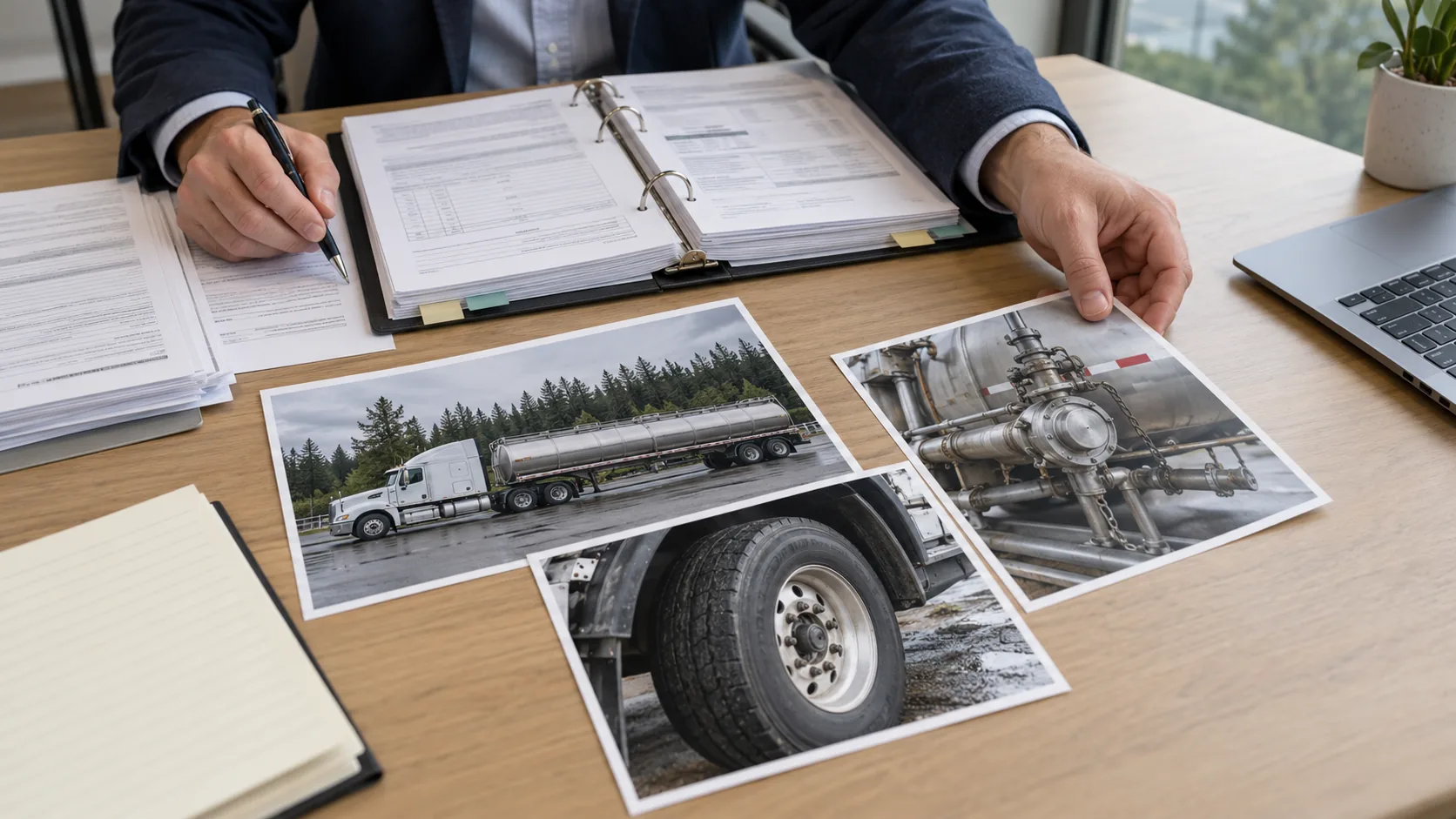
Seattle Truck Law focuses on serious truck and bus cases. We can investigate the driver and carrier while also examining the cargo, shipping papers, packaging, placards, loading operation, permits, route, emergency response records, and other companies involved in putting the shipment on the road.
Our lawyers have deep experience litigating commercial cases such as these and fighting for everything our clients need to recover from their injuries.
If you or someone you love has suffered a serious injury in a Washington accident involving a truck carrying hazardous materials, call 866-580-HURT (4878) or contact Seattle Truck Law to request a free initial consultation.
Vehicles Where This Happens
Related Accident Causes
client testimonials
“Morgan helped me with a lawsuit against a trucking company. He handled my case with the utmost professionalism. I was very impressed with the outcome as well as his attentiveness to my needs.”
— Joshua Granger
“When I called Morgan I was lost… When Morgan laid our case out in front of us, I knew I had made a very wise choice in attorneys. My wife is 100% disabled, but thanks to Morgan Adams she has an income and investments to take care of her needs. I would recommend Morgan Adams to my best friend.”
— Kenneth Floyd Boyles
“My mom was rear-ended by a tractor trailer. The insurance company said they would take care of us and nothing happened. We hired Morgan and he… [found] proof the truck driver was speeding, proof the company destroyed vital evidence, and proof they never should have hired him.”
— Brain injury client
“I have already recommended Mr. Adams to my friends. I was extremely pleased with the speed with which my case was handled and the outcome. I was in a car wreck that will require surgery, and Morgan got me the money to take care of my bills.”
— Robert
“[Morgan] explained everything to me, he was always helpful, and his staff was very professional, friendly, and nice. He was clearly respected by the mediator and the trucking company’s lawyer.”
— Mary
“Morgan is a very intelligent, hardworking lawyer and a fierce advocate for his clients. He is one of the foremost [resources] in the United States regarding interstate trucking law and regulations. I highly recommend him.”
— Steven Frederick
“Morgan Adams is a lawyer who gives everything he has to his clients. I have lectured with him at Trial Lawyers seminars and have worked with him on trucking cases. He is constantly striving to do his best for his clients.”
— Marion Munley
“I endorse Morgan without hesitation. I contacted him on a complex trucking matter for his thoughts. He took 45 minutes with me on the phone and we discussed it in detail.”
— David Peel
“Morgan and I have collaborated on a number of national projects and cases in the trucking arena. He is… always striving to stay on the cutting edge [and] is totally dedicated to doing the best possible job for his clients. I highly endorse him.”
— Joseph Fried
Contact the Seattle Truck Law Team Today
If you’ve been injured in a trucking accident, contact Seattle Truck Law at (866) 580-4878 or fill out our online form for a free consultation. You pay no fees or expenses unless we recover compensation on your behalf. Don’t wait—the sooner you contact us, the sooner our attorneys can preserve evidence, investigate your claim, and start building your case.